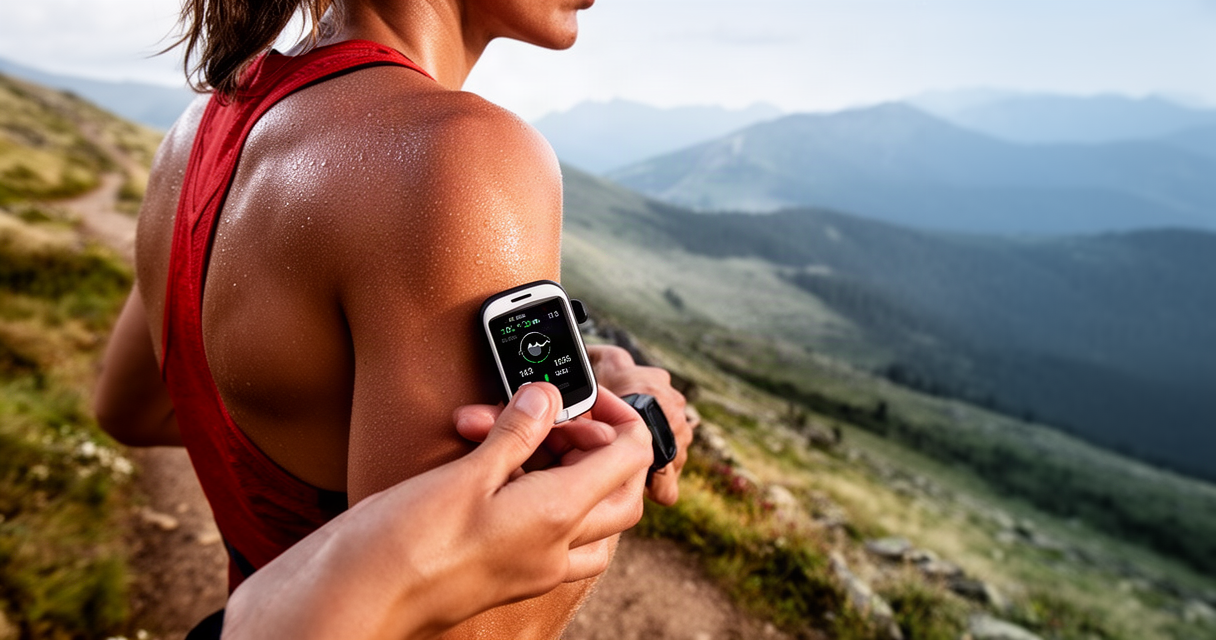
Continuous glucose monitors have been marketed to endurance athletes as the next frontier in performance data — a real-time window into the fuel that actually limits marathon and Ironman performance. The company built specifically on that pitch, Supersapiens, shut down in March 2024. That timing is not a coincidence, and it is the first data point worth sitting with before spending another dollar on a sensor.
The stakes are real money stacked on real money. A CGM subscription runs $50 to $200-plus a month, layered on top of the GPS watch, the power meter, and the recovery ring already strapped to most serious athletes. Is a CGM worth it for endurance athletes chasing marginal gains, or is it another wellness tax dressed up as sports science?
The short answer: there is no robust evidence that CGM use improves performance in non-diabetic athletes, competitive cyclists cannot legally use one during a UCI-sanctioned race, and the one company that built its entire brand around this use case folded. The honest use case that survives scrutiny is narrow — a two-to-four-week self-experiment on fueling timing, not a permanent dashboard. What follows is the evidence, section by section.
What the Evidence Actually Says
Two recent reviews have looked specifically at whether CGM data helps non-diabetic endurance athletes perform better, and both land in the same place. A 2025 review published in a Springer sports-science journal, titled around the application potential of CGM in elite endurance athletes without diabetes, found no consistent evidence that real-time glucose tracking translates into measurable performance gains. A 2023 Sports Medicine review reached a similar conclusion, noting that glucose fluctuations in trained, non-diabetic athletes during exercise are largely a normal physiological response rather than a signal that needs correcting.
One recurring finding across this research: glucose readings in cyclists did not correlate with power output, pacing, or finishing times. Athletes who ran higher or more variable glucose during a hard effort were not systematically slower or faster than athletes with flatter traces. Glucose behaves as a downstream marker of effort, hormonal response, and hydration — not as a lever an athlete can pull mid-race.
The bigger conceptual problem is what a CGM actually measures. It tracks interstitial glucose — the sugar concentration in the fluid between cells, not blood glucose and certainly not muscle glycogen. Bonking is a glycogen-depletion and carbohydrate-flux problem: how much fuel is stored in the muscle and how fast the gut can absorb and deliver more. A CGM has no direct line of sight into either. It is measuring a proxy of a proxy.
That gap is why “optimal glucose range for performance” claims, common in CGM marketing copy, remain unproven per the reviewers above. There is no validated target zone for a healthy endurance athlete to chase, because the research establishing one does not exist yet. This mirrors a pattern seen elsewhere in wearable-adjacent fitness tech: AI body-fat apps claiming to replace DEXA sell precision the underlying method cannot deliver, and CGM-for-performance marketing runs the same play with a different sensor. On r/AdvancedRunning, one runner summarized the physiology bluntly: glucose spikes and dips during hard efforts are a benign, expected response in someone without diabetes, not a red flag that needs managing.
What Problem Does a CGM Actually Solve for Endurance Athletes?
Endurance athletes serious about fueling already have better instruments for the job. Carbohydrate intake per hour, total daily energy, and macro timing are things athletes can log directly and act on immediately — no interstitial lag, no proprietary algorithm standing between the number and the decision.
Detailed fueling and macro-tracking apps like MacroFactor solve this more directly than a CGM does. They adjust caloric and carbohydrate targets based on logged intake and trend weight, which speaks to the actual variables that determine glycogen availability going into a long session. Pairing that with one of the AI calorie counter apps built for fast logging closes the loop on the input side of fueling — what actually goes in, not an indirect estimate of how the body processed it after the fact.
A CGM answers “how did my glucose move” after training. Fueling apps answer “did I eat enough carbohydrate before this session” before it starts. For an athlete trying to stop bonking at mile 20, the second question is the one that matters, and it doesn’t require a subscription sensor stuck to the arm.
The Interstitial Lag Problem (Why Real-Time Fueling Calls Are Shaky)
Interstitial glucose does not move in perfect sync with blood glucose. At rest, the lag is roughly three to five minutes — glucose diffuses from capillaries into interstitial fluid, and the sensor reads the fluid, not the blood directly. During exercise, that same physiological delay mechanism widens, because increased blood flow, sweat, and local tissue changes distort the diffusion pattern further. One published aerobic-exercise study measured a lag around 12 minutes, though it’s worth noting that specific study was conducted in people with Type 1 diabetes, so the exact magnitude in a non-diabetic endurance athlete has not been separately confirmed. The direction of the effect — lag widens under exertion — is well established regardless.
A 10-to-15 minute delay is not a rounding error in a race. It means a CGM reading during a hard tempo effort or a marathon’s back half reflects glucose status from over a mile ago, not right now. Treating that number as a live coaching signal — “eat now because the graph is dropping” — risks reacting to a stale picture of what already happened, not what’s happening.
This matches what athletes report using CGMs in training. On r/triathlon, one athlete described the device as not accurate enough during long runs to trust for in-the-moment fueling decisions, preferring to stick with a pre-planned carbohydrate schedule instead of chasing the live graph. That’s the practical verdict on real-time use: the lag makes a CGM a mediocre in-race copilot and a more useful after-the-fact teacher.
Why You Can’t (Legally) Race With One Anyway
For competitive cyclists, the real-time debate is moot in competition. The UCI banned in-competition use of devices that measure metabolic values — glucose and lactate specifically — effective June 10, 2021, under rule 1.3.006bis. The rule targets exactly the use case CGM marketing leans on hardest: live, in-race metabolic feedback.
Training use remains fully allowed. Riders can wear a CGM on every long ride, every interval session, every camp — the ban only kicks in on race day, in competition. The UCI does carve out derogations for riders managing diabetes, who can apply for medical exemptions.
The rule specifically covers cycling. Running and triathlon governing bodies generally do not have an equivalent in-competition ban on metabolic devices, though the landscape varies by federation and event, and athletes should check their specific sanctioning body before racing with one. For competitive cyclists, though, the UCI rule alone undercuts a large chunk of the original sales pitch: real-time glucose coaching during the event that matters most.
What Happened to Supersapiens (and Why It Matters)
Supersapiens was the CGM built specifically for this market. It launched as an athlete-focused product on top of Abbott’s Libre sensor technology, signed integration deals with professional cycling teams, and marketed itself directly at the endurance and competitive-cycling audience — the exact reader this article is written for.
It never got FDA approval. In March 2024, Supersapiens terminated athlete memberships and stopped shipping sensors, ending the product line. Any comparison guide still pitting “Supersapiens vs. X” online is now stale content describing a product that no longer exists.
The shutdown is worth treating as a market signal, not just a footnote. A company with direct pro-team access, dedicated athlete-specific hardware, and years of runway to prove the performance case still could not sustain the business. On r/AdvancedRunning, one commenter tied the two facts together directly: Supersapiens shut down around the same time the UCI banned in-competition metabolic devices, a combination that gutted the product’s core marketing angle for competitive cyclists. When the company built specifically to make the athlete case for CGMs fails to make it, that is stronger evidence than any single study.
The Honest, Limited Use Case (If You Still Want to Try It)
None of this means a CGM is useless for every endurance athlete. It means the useful window is short and specific: a two-to-four-week self-experiment focused on fueling timing around sessions of 90 minutes or longer, not an ongoing subscription.
The most consistent pattern athletes report from short trials is about timing carbohydrate intake relative to a session, not chasing a “zone” during it. On r/triathlon, one athlete found that eating carbs strategically around the training session mattered more for how the effort felt than trying to carb-load the day before — a timing insight the CGM surfaced by showing glucose trends before and after several long rides, not a live in-race signal.
The second pattern shows up post-exercise. Endurance athletes who bonk or crash hard after long sessions can use a short CGM trial to see how quickly and how far glucose drops in recovery, then adjust the size and timing of the post-workout carbohydrate hit. One runner on r/AdvancedRunning said tracking that recovery-window pattern for a couple weeks changed their recovery strategy — specifically, eating a real carbohydrate-forward meal sooner after long runs instead of waiting.
The learning curve on both patterns is short. On r/triathlon, another athlete put the timeline plainly: it took one to two weeks of data to see the personal pattern clearly, and there was no reason to keep paying for the sensor after that if not managing diabetes. That is the honest ceiling on this technology for a non-diabetic athlete — a short diagnostic tool for learning individual fueling-timing patterns, not an ongoing glycogen or carbohydrate-flux sensor, because it cannot measure either of those things directly.
CGM for Endurance Athletes: Device Comparison
| Device | Price (approx., as of writing) | Prescription | Sensor Source | ”AI Coaching” Reality | Best For |
|---|---|---|---|---|---|
| Dexcom Stelo | About $89/month (2 sensors/30 days), or about $99 one-time for 2 sensors; FSA/HSA eligible | None (OTC) | Dexcom | Basic in-app trend nudges, no clinical validation for athletic performance | Cheapest way to run the 2-4 week self-experiment |
| Abbott Lingo | About $49 for one 14-day sensor, or about $84–89/month | None (OTC) | Abbott Libre | Algorithmic “coaching” nudges based on glucose trends, marketed as AI but not a validated clinical algorithm | Short trial, similar tier to Stelo |
| Levels | About $199/month, or about $166/month billed annually; first month around $398 including sensors | None (OTC, uses Abbott/Dexcom sensors) | Abbott Libre / Dexcom | Proprietary “metabolic score” — not peer-reviewed, not validated against clinical outcomes; only the underlying sensor is FDA-cleared, not the app’s score | Athletes who want the most polished app UI and don’t mind paying for it |
| Nutrisense | About $149–215/month, often insurance-eligible | Often requires clinician sign-off | Abbott / Dexcom | Human registered-dietitian coaching layered on top of sensor data — the “coaching” here is a person, not an algorithm | Athletes who specifically want a human RD reviewing the data, not just software |
Pricing above is approximate and should be checked against current vendor pages before purchase — subscription tiers on this category shift often. Signos is worth a mention only to rule it out: it exists in this same OTC-CGM space at roughly $129–199/month, but it’s built and marketed for weight management, not athletic fueling. Wrong tool for this question.
The “AI” language across these products deserves scrutiny on its own. Levels’ metabolic score and Lingo’s coaching nudges are vendor-proprietary outputs, not validated clinical algorithms — the FDA clearance sits on the sensor hardware, not on what the app tells someone to do with the data. That gap shows up in the wild: one Stelo app-store review described the in-app AI coach recommending a dietary change that ran counter to sound athletic fueling practice, a reminder that these outputs are unvalidated software suggestions, not medical or sports-science advice.
Athletes already running recovery-tracking rings like Ultrahuman or Oura should think hard before adding a fourth or fifth data stream. Stacking a CGM on top of HRV, sleep score, and training load risks more noise than signal, especially when the CGM’s own evidence base is this thin.
Who Should Skip a CGM Entirely
Most endurance athletes fall into this category, and it’s worth saying so directly. Anyone already dealing with subscription fatigue with wearables should treat a CGM as the subscription to cut, not add — the same logic that pushes plenty of athletes toward Whoop alternatives that drop the recurring fee entirely applies here with even less performance evidence behind the spend.
Cyclists chasing a legitimate race-day edge should look elsewhere. A device banned in competition and unproven for training-transfer performance is not where marginal gains live. Athletes who already have fueling dialed in — consistent carbohydrate intake per hour, a tested race-day nutrition plan, no history of bonking — have little left for a CGM to teach them.
One carve-out matters more than any of the above: this entire discussion is about non-diabetic athletes using a CGM as a training or wellness tool. It is not medical advice, and diabetic readers managing glucose for health reasons should follow their clinician’s or care team’s guidance on device choice and glucose targets, not a wellness-blog protocol built for a different population.
Frequently Asked Questions
Does a CGM actually improve endurance performance?
No robust evidence supports that claim for non-diabetic athletes. A 2025 Springer review and a 2023 Sports Medicine review both found no consistent link between CGM use and measurable performance gains in trained endurance athletes.
Can athletes race with a CGM?
Competitive cyclists cannot use one in UCI-sanctioned competition — the UCI banned in-competition metabolic-value devices, including glucose monitors, effective June 2021. Training use is unrestricted. Running and triathlon generally lack an equivalent ban, but athletes should confirm with their specific federation before race day.
What happened to Supersapiens?
The athlete-focused CGM brand, built on Abbott Libre sensor technology with professional cycling team integrations, terminated memberships and stopped shipping sensors in March 2024. It never received FDA approval. The shutdown of the company built specifically for this use case is a strong signal about the market’s actual demand.
Is CGM use safe for non-diabetic athletes?
The devices themselves are generally considered low-risk as wearable sensors, but this article is not medical advice. Anyone with diabetes or another condition affecting glucose regulation should follow their clinician’s guidance, not a training-blog protocol.
Which CGM is best for a short athletic trial?
Dexcom Stelo, at roughly $89/month or about $99 one-time for two sensors, is the cheapest OTC option for running a two-to-four-week fueling-timing self-experiment without a prescription. Pricing should be reconfirmed before purchase.
Why do glucose levels spike during hard workouts?
Hormonal stress response — adrenaline and cortisol release during intense effort — triggers the liver to release stored glucose, independent of what an athlete has eaten. Per the reviewed research, this spike is a normal, benign physiological response in non-diabetic athletes, not a sign of metabolic dysfunction.
The Bottom Line
A CGM will not make an endurance athlete faster. The evidence for a performance benefit in non-diabetic athletes doesn’t exist yet, competitive cyclists can’t legally use one mid-race, and the company built specifically to prove this use case worked shut down in 2024. That combination — weak science, a competition ban, and a failed purpose-built product — is about as clear a signal as this category gets.
The one use case that survives scrutiny is small: a two-to-four-week OTC trial, Stelo is the cheapest entry point, run around long training sessions to learn a personal fueling-timing pattern, then cancel. That’s a diagnostic tool, not a permanent piece of the training stack.
The most reliable glucose sensor an endurance athlete has is still the one that’s been working since mile one: how the body actually feels.