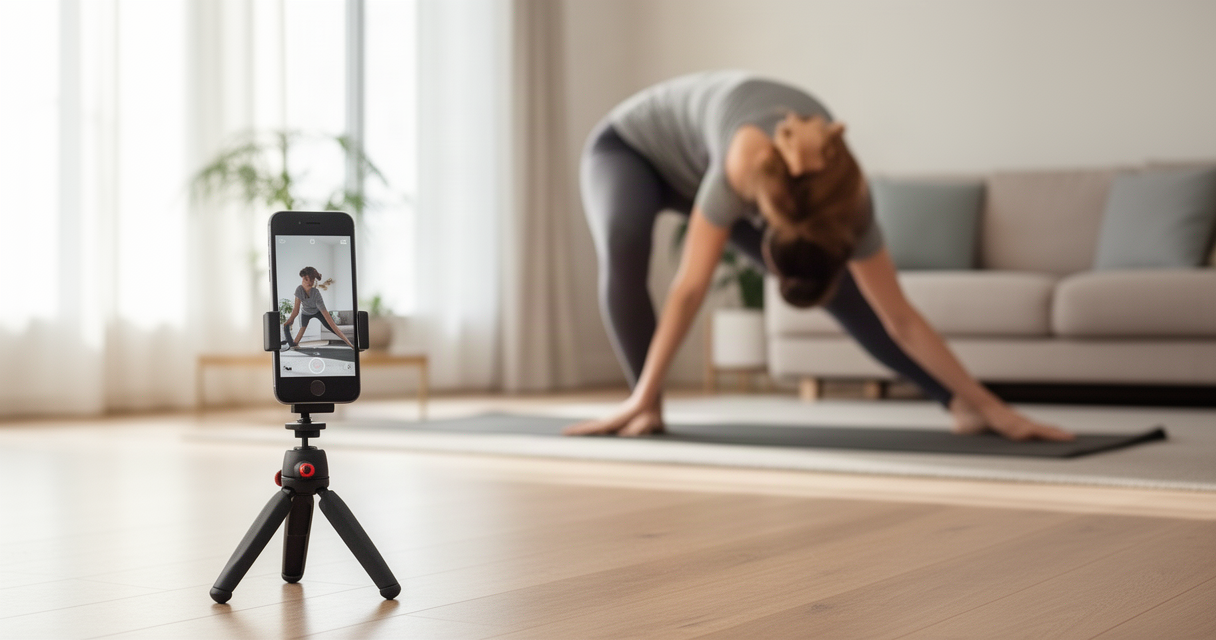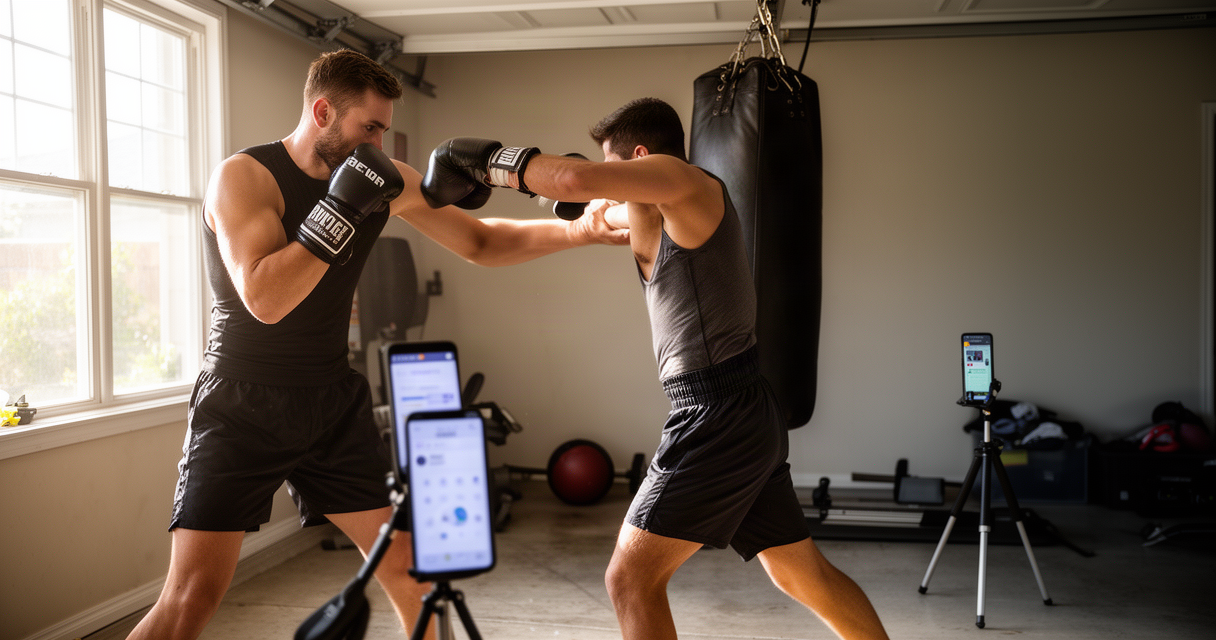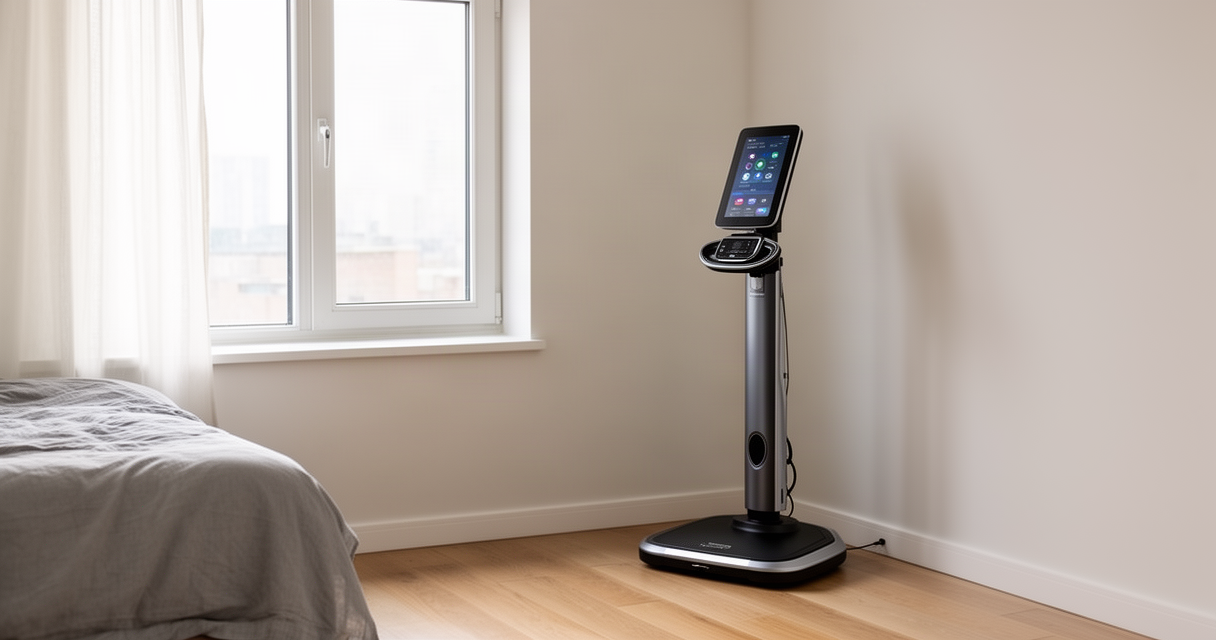
Every smart-home-gym ad running right now features Tonal, and Tonal’s entire business model runs through a wall most renters don’t own.
For anyone renting, that means written landlord permission, in some buildings a Certificate of Insurance, eight drilled holes someone has to patch before move-out, and a machine that can’t leave with the lease. The best AI smart home gym for renters in 2026 isn’t the one dominating the ad spend — it’s whichever freestanding option delivers real resistance and real AI coaching without needing anyone’s permission first.
Quick answer: the Speediance Gym Monster is the strongest default. It’s freestanding, needs no wall mount, and its core machine — custom workouts, 220-plus classes, dynamic weight modes — runs on zero subscription. The Vitruvian Trainer+ wins on footprint, sliding under a bed, but its AI coaching becomes a paid plan after the first year. Tonal only earns a landlord conversation on a long lease.
The full breakdown, including where each option’s AI features quietly turn into a monthly bill, follows below.
Can You Even Put a Tonal in a Rental?
Technically, yes. Practically, it’s more of a project than the advertising suggests.
Tonal’s installation drills eight additional small holes, using a half-inch bit, into wall studs spaced 16 to 24 inches apart (Tonal Knowledge Base, installation requirements). This is not a removable bracket — it’s a permanent fixture bolted into the framing behind the drywall.
Renters can install a Tonal, but Tonal’s own support documentation requires written landlord permission first, and some buildings require a Certificate of Insurance from the install partner before work begins (Tonal Knowledge Base, “Tonal for Renters”). Whoever moves out is responsible for patching and repainting those eight holes.
Space requirements add up too: about 7 feet of clearance out from the wall (3.5 feet on each side), continuous WiFi, and a grounded outlet within 6 feet. Even Tonal’s own support language hedges on how simple this actually is, describing the unit as “easily installed… as long as it meets installation requirements” — a sentence doing a lot of work for anyone in a 600-square-foot apartment.
One Product Hunt reviewer described what happens when the process breaks down: “All I’ve got to show for the past 4.5 months is a lot of waiting, phone calls with sympathetic but ultimately ineffective service reps, and a wall that will need to be patched and repainted.” That’s an extreme case, but it illustrates a downside risk renters carry that owners simply don’t.
None of this makes Tonal a bad machine. It makes it a mismatch for a lease with an uncertain end date.
Best AI Smart Home Gyms for Renters at a Glance
| Gym | Mount Type | Resistance / Tracking | Hardware Price | Subscription | Footprint | Best For |
|---|---|---|---|---|---|---|
| Tonal | Wall-mounted, digital cable | Digital resistance | $4,295 MSRP (about $3,995 promo) | $59.95/mo, mandatory | About 7 ft clearance | Owners or long-lease tenants |
| Speediance Gym Monster | Freestanding | Digital cable, up to 220 lbs | $3,299 (Gym Monster 2: $3,849) | No mandatory sub (Wellness+ AI optional, $24.99/mo) | Large-dresser-sized | Renters who want zero recurring cost |
| Vitruvian Trainer+ | Freestanding | Digital resistance, up to 80 lbs | $2,990 | $39/mo after year one, or $990 lifetime | 20.5 x 46 in | Tightest floor space |
| Tempo Move | Freestanding | Real plates + iPhone camera AI tracking | $395–$495 | $39/mo required, no free tier | Compact, uses owned weights | Renters who already own plates |
Freestanding doesn’t automatically mean subscription-free — both Vitruvian and Tempo gate core AI features behind a paid plan, and Tonal’s fee isn’t optional at any tier. These aren’t the only AI-driven fitness options worth weighing, either: renters not ready to buy hardware at all can look at AI personal trainer apps for programming without a machine, and the same no-subscription instinct applies to no-subscription fitness wearables for tracking recovery and workload.
Speediance Gym Monster (and Gym Monster 2): The Actual No-Subscription Default
The Gym Monster starts at $3,299 for 220 lbs of digital resistance; the upgraded Gym Monster 2 runs $3,849 (Speediance product page, checked September 2026). Both are fully freestanding — no drilling, no landlord conversation, no permanent fixture.
What separates Speediance from the rest of this list is what’s included before any subscription enters the picture. Custom workout building, a library of 220-plus classes, and dynamic weight modes all run on the base machine. A Google Play reviewer summarized the pitch accurately: “No wall mounting required. You just unfold the platform, stand on it to anchor the machine, and start lifting. Perfect for apartments or rentals… No Mandatory Subscription: you aren’t forced into a hefty monthly fee just to use the machine’s smart features. You can build custom workouts and track your lifting data for free.”
Speediance does sell an optional AI layer — Wellness+ — at $24.99/mo or $249.99/yr, adding adaptive coaching, HRV and recovery tracking, and AI form feedback. The reviews on that layer are rougher. An Apple App Store reviewer put it directly: “The machine is outstanding but the Wellness+ AI trainer is bad. There is no way to extend the number of repetitions and it often messes up the days of the week. It needs a lot of work.” A separate reviewer took a more favorable view of the same feature set, pointing to Wellness Age: “it pulls together all the health stuff (sleep, HRV, training load)… I also like that they added the AI form coaching and the movement videos, so I can build my own workouts right from my phone.”
The pattern across app reviews is consistent: the hardware earns praise, the app and its AI layer draw the complaints. For a renter choosing between Speediance and a subscription-locked competitor, that’s a favorable trade — the part that costs money monthly is optional, and the part that’s free is the part doing the actual strength work. Anyone who wants a second opinion on AI-driven form correction before trusting Wellness+ can compare it against dedicated AI form-check apps built for that single job.
Vitruvian Trainer+: Smallest Footprint, But Read the Subscription Terms
At $2,990, the Vitruvian Trainer+ is the space-efficient option on this list. Its footprint measures 20.5 by 46 inches (Vitruvian Knowledge Base, dimensions page) — small enough to roll on its wheels and slide under a bed, a genuine advantage in a studio where Speediance’s larger frame would eat too much floor.
The catch sits in the subscription structure, not the hardware. Vitruvian includes 12 months of All-Access with purchase, then converts to $39/mo, or a one-time $990 lifetime option. Community reaction to that transition is mixed enough to be worth reading closely before buying.
Several users in r/Vitruvian_Form describe dropping the plan once the free year ends. One wrote: “I love the device. It has replaced my barbell and weights. Neat little package, reclaimed a ton of space. However, 40/month for programs I do not use, coaches I do not follow, only for access to beeps and echo mode… Dropping subscription.” Another raised the value question directly: “For nearly $400 a year, what are you truly getting that is worth that on an on-going basis? Customer support confirmed that they do not produce new coach-led workout content each month, so you’re not getting any workout content in the same way Peloton or Tonal give you.”
What’s worth flagging for anyone assuming they’ll cancel and keep lifting as normal: losing the subscription doesn’t just remove extra classes. It removes Echo mode — the feature that auto-adjusts resistance through a rep — and automatic data logging. One user who let the subscription lapse described the downgrade: “The machine is still very functional and it’s easy to just pick an exercise, set the weight, and go. The bad: I miss just lift with echo mode. It would be nice to have the data logging also so I didn’t have to journal my own.”
That’s a materially different situation than Speediance’s optional add-on. Vitruvian’s AI-adjacent features aren’t a bonus layer on top of a complete free product — they’re part of what makes the machine feel “smart” in year one, and they disappear in year two without payment.
Tempo Move: Real Weights, Camera-Based AI, Smallest Price Tag — But No Free Tier
Tempo Move flips the model entirely. Instead of digital cable resistance, it uses actual weight plates and dumbbells already owned, paired with an iPhone’s depth sensor for 3D Vision — camera-based rep counting and form tracking rather than a built-in resistance mechanism.
Hardware cost is genuinely the lowest on this list, at $395 to $495 (Tempo shop page, checked September 2026). That’s a fraction of Speediance or Vitruvian’s entry price, and it’s fully freestanding with no wall mount required.
The tradeoff is the subscription structure: $39/mo is required to access classes at all, with no meaningful free tier. Where Speediance’s core function works without any ongoing payment, and Vitruvian at least includes a free year, Tempo Move gates the product’s primary use case — guided, AI-tracked workouts — behind payment from day one.
That makes Tempo Move a narrow recommendation. It fits a renter who already owns a set of plates or dumbbells and wants AI form-checking layered on top, not someone shopping for an all-in-one machine. Anyone in that narrower situation could also look at AI form-check apps without buying hardware at all, since Tempo’s core value proposition — camera-based form feedback — is exactly what those apps are built to do. For renters chasing more precise load numbers than any camera-based system reports by default, a barbell velocity sensor instead clips onto a normal bar and reads bar speed directly, at a fraction of Tempo’s monthly cost.
When the Tonal-and-Your-Landlord Conversation Is Actually Worth Having
Freestanding isn’t automatically the compromise pick. In a few specific situations, having the landlord conversation about a Tonal install is the better call than settling for a freestanding machine:
- At least 18 months left on the lease, or long-term ownership of the unit, so the installation cost gets amortized rather than abandoned at move-out.
- A genuine priority on the smallest wall footprint at maximum resistance, paired with comfort accepting a permanent fixture plus the $59.95/mo membership fee Tonal requires for dynamic weight, programs, and progress tracking.
- A building that already permits wall-mounted fixtures — TVs, stud-anchored shelving — since that history makes a landlord conversation about Tonal a smaller ask.
Outside those three conditions, the landlord conversation isn’t really a workaround — it’s extra friction for a result a freestanding machine already delivers. “Just ask your landlord” gets repeated in comment sections as a solution, but it assumes a lease timeline and landlord relationship most renters don’t have. A YouTube commenter on a Tonal-versus-Speediance comparison video captured the tension well: “I love my tonal, but I agree… the subscription is insane. I’ve never understood why they don’t at least do tiered subscriptions… I do fear if/when it stops working and I’m stuck with this heavy ass machine on the wall.” That fear compounds for a renter — a heavy, wall-bolted machine is a much bigger problem when a lease ends than when someone owns the wall it’s mounted to.
Our Take: What We’d Buy If We Were Renting
The default pick is the Speediance Gym Monster. Full function — resistance, workout building, class library — with zero forced subscription is a rare combination in this category, and it’s worth tolerating a rougher app experience to get it. Wellness+‘s mixed reviews matter less when the add-on is optional; a renter can skip it entirely and still own a complete home gym.
For anyone genuinely constrained on floor space, the Vitruvian Trainer+ is still the right call — but the $39/mo (or $990 lifetime) should be budgeted from the start rather than discovered as a surprise in month 13. Community sentiment in r/Vitruvian_Form isn’t that the machine is bad; it’s that the ongoing fee for Echo mode and data logging feels steep once the free year ends. A Product Hunt reviewer made a nearly identical complaint about Tonal’s fee that applies just as well here: “50.00 a month is way too much especially if you already have a peloton or a bike app that you pay for… It’s a rip off and not justified when you pay thousands for a device and can’t even use it without paying 50.00 for the month.” Vitruvian’s number is lower, but the shape of the complaint — paying monthly for software after already paying thousands for hardware — is the same category of frustration.
Tempo Move is the one to skip unless plates are already owned. A mandatory $39/mo with no free tier is the weakest subscription structure on this list relative to what a renter gets from scratch, even with the lowest hardware price. It’s a reasonable add-on for someone with existing equipment who wants AI-driven rep counting; it’s a poor foundation for building a home gym from zero.
The wall should stay undrilled unless the numbers say otherwise. Saving $500 to $1,000 versus Speediance isn’t worth drilling into a wall that isn’t owned, unless the plan is staying in that unit for years. Renters who want AI-personalized programming without any hardware at all have another lane entirely: AI programming apps like Fitbod or Dr. Muscle run on a phone and a regular barbell, no smart machine required.
Frequently Asked Questions
Can you install Tonal in a rental without landlord permission?
No. Tonal’s own documentation states renters need written landlord permission before installation, and some buildings require a Certificate of Insurance from the install team. Whoever moves out is also responsible for patching and repainting the eight drilled holes.
What’s the best AI home gym that doesn’t require drilling into a wall?
Speediance Gym Monster and Vitruvian Trainer+ are both fully freestanding, with no wall mount involved. Tempo Move is also freestanding, but it uses real weight plates paired with phone-camera tracking rather than built-in digital resistance.
Do freestanding smart gyms give the same resistance as wall-mounted Tonal?
Close enough that it’s rarely the deciding factor anymore. Speediance’s Gym Monster offers up to 220 lbs of digital resistance, while Tonal is typically cited around 200 lbs combined — freestanding is no longer a meaningful downgrade in raw resistance.
Which renter-friendly smart gym still locks AI coaching behind a paid subscription?
Vitruvian Trainer+ gates Echo mode and automatic data logging behind $39/mo after the first free year, and Tempo Move requires $39/mo from day one with no free tier. Speediance is the exception — its core coaching and workout library work without any subscription at all.
How much floor space does a freestanding smart home gym actually need?
Vitruvian’s footprint is 20.5 by 46 inches and slides under a bed. Speediance’s Gym Monster is closer in size to a large dresser — bigger than Vitruvian, but nowhere near Tonal’s roughly 7-foot wall clearance requirement.
The Bottom Line: Best AI Smart Home Gym for Renters
For most renters, the wall-mount question answers itself before price or features even enter the conversation: go freestanding. Speediance Gym Monster is the pick for anyone who wants a complete home gym without ever thinking about a subscription again; Vitruvian Trainer+ is the pick when floor space is the real constraint, as long as the $39/mo gets budgeted rather than discovered later.
Before spending anything, measure the actual floor space available and check how long the current lease runs. Those two numbers settle more of this decision than any spec sheet.
A landlord doesn’t owe anyone a wall — and in 2026, no renter needs one to build real strength at home.