This Carv ski coach review is written for the self-taught skier: the one who’s never booked a lesson and is deciding whether a boot sensor can close that gap. Carv’s pitch is specific: a boot-clip sensor and an app that coaches skiers in real time through an earpiece, built for what the company frames as the roughly 92% of skiers who never book a lesson. That number, whatever its exact source, points at something real — most adult skiers learned from a friend, a parent, or trial and error on a bunny hill, then spent years skiing the same technique flaws into muscle memory.
The stakes for that group are practical, not abstract. Bad habits compound on skis. A dropped inside shoulder or a stem-christie turn pattern that felt fine at intermediate speed becomes a real limiter — and a real injury risk — once terrain gets steeper.
The quick answer: Carv is a legitimate feedback loop for skiers who already have solid fundamentals and want to sharpen specific technique metrics — edge angle, pressure timing, turn symmetry. It is not a fundamentals-fixer, and it does not replace what a private lesson does for someone with actual technical gaps. For a casual skier who hits the slopes a week a year, a cheaper video-based app is the smarter buy.
The comparison below walks through why.
What the Carv Ski Coach Actually Does
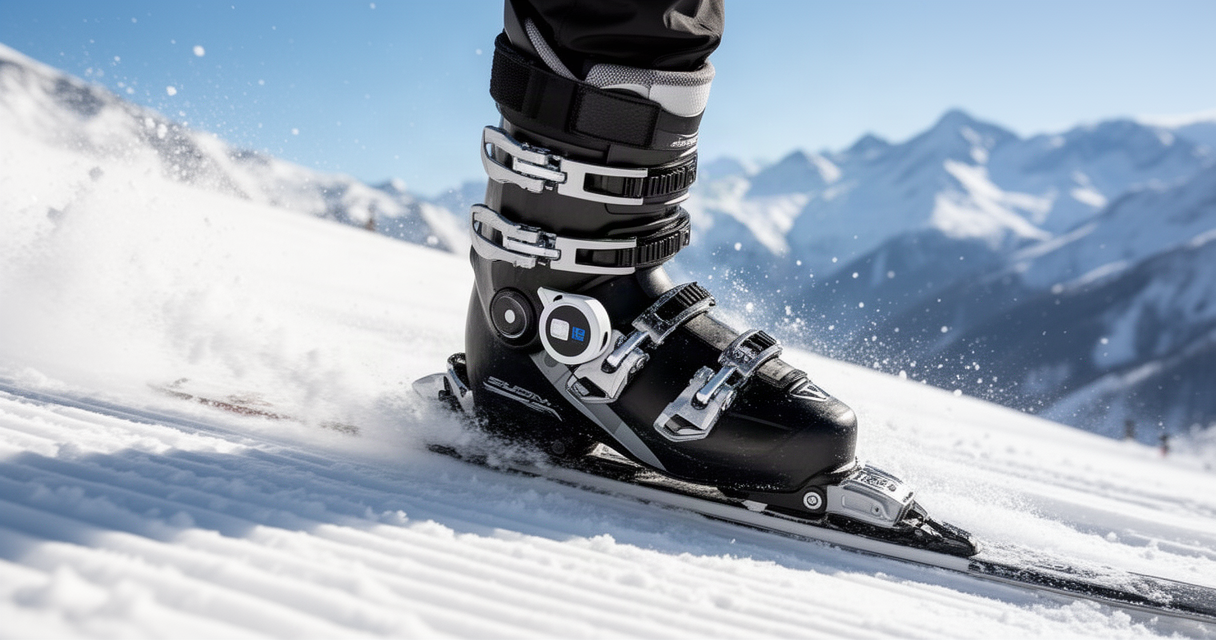
Carv’s hardware is a thin sensor that clips into a ski boot and pairs with a phone app. Inside, an accelerometer and gyroscope track boot-level motion — edge angle, pressure distribution between feet, turn timing, symmetry left to right — and feed it through a machine-learning model trained on ski biomechanics data.
The output arrives as real-time audio coaching through an earpiece or headphones while skiing, plus a post-run breakdown in the app: a numeric “Ski:IQ” score, turn-by-turn graphs, and specific cues like “more pressure on your downhill ski at turn initiation.”
That’s a meaningfully different product than a GoPro video someone reviews at the lodge. The feedback happens mid-run, tied to a specific turn, while the sensation is still fresh. That immediacy is Carv’s actual differentiator against slower, video-only tools.
The “Skiers Who Never Take a Lesson” Pitch — Does It Hold Up?
Carv markets itself around the idea that the vast majority of skiers are self-taught and staying that way, so the product meets them where they already are instead of asking them to book something they’ve never booked. As a wedge into a huge, underserved market, the framing is smart marketing.
As a claim about what the product replaces, it deserves scrutiny. Real-time audio cues on edge angle and pressure are useful correction tools — for someone who already understands what correct movement feels like. They are much weaker at teaching someone what correct movement is in the first place.
A ski instructor watching a student in person catches things a boot sensor structurally cannot: a knee caving in from a hip issue, a fear response causing back-seat skiing, a stance problem rooted in old boots or bad alignment. Carv reads motion data. It doesn’t watch a body move through space or ask why a skier is scared on a particular pitch.
Threads on r/skiing and r/SkiRacing that discuss Carv tend to frame the purchase decision explicitly as “Carv or lessons,” not “Carv or nothing” — which is itself a tell that skiers researching the product already sense it’s a substitute good, not a strictly additive one. That framing matters more than the marketing headline.
Carv vs. a Private Lesson vs. Cheaper AI-Only Apps
| Carv | Private ski lesson | SkiCoach (app) | EDGIN (app) | |
|---|---|---|---|---|
| How it works | Boot sensor + real-time audio coaching | Human instructor, in-person, live | Phone video, offline AI technique scoring | Phone video, AI analysis for ski/snowboard |
| Cost (at time of writing — verify current pricing) | Roughly $149 for the sensor plus an annual membership near $199 for full features | Commonly $100–$250+ per hour, resort-dependent | About $20 one-time | Check current app store pricing; typically a low-cost or freemium model |
| Feedback timing | Real-time, mid-run | Real-time, mid-run | After the run, from recorded video | After the run, from recorded video |
| Catches fundamentals problems | Weak — reads motion metrics, not form or fear | Strong — watches the whole body and the context | Moderate — sees actual movement on video | Moderate — sees actual movement on video |
| Best for | Intermediate-to-advanced skiers refining specific metrics | Skiers with real technique gaps, fear, or plateaus | Budget skiers who want occasional AI feedback | Skiers and snowboarders wanting a lighter video-based check-in |
| Hardware needed | Yes — boot sensor | None | None | None |
| Ongoing cost | Annual membership for full feature set | Per-session, no subscription | One-time | Varies by tier |
Carv’s cost structure has shifted before — the company has moved between straight hardware purchase and bundled membership models — so treat the figures above as directional, not fixed, and check Carv’s current pricing page before buying.
The gap that matters isn’t really price. It’s what each option is structurally capable of diagnosing. A sensor measures what the boot did. An instructor sees why the skier did it.
Is Carv Worth It for Self-Taught Skiers? Who It’s Actually For
Pick Carv if: the skier already has clean parallel turns, skis regularly (10+ days a season), and wants marginal technique gains — tighter edge angles, better pressure timing, more turn symmetry — without booking repeat private lessons. This is the intermediate-to-advanced skier who has plateaued and knows roughly what’s wrong but wants quantified, mid-run correction to fix it faster.
Pick a private lesson if: the issue is fundamental — back-seat skiing, fear on steeper terrain, a stance or alignment problem, or simply not knowing what “correct” feels like yet. No sensor data replaces a trained eye watching the whole picture and adjusting cues on the spot. This is also the right call after any injury, where movement compensations need a human to catch.
Pick SkiCoach or EDGIN if: skiing happens a week or less per year, the budget doesn’t stretch to $150-plus in gear plus a membership, or the interest is casual — a rough sense of what’s going wrong on video, not a real-time coaching layer. At roughly $20 one-time for SkiCoach, the cost of finding out whether AI feedback is even useful is trivial next to Carv’s buy-in.
For a broader look at how AI stacks up against a human coach outside of skiing, see the best AI personal trainer apps compared for 2026.
What Carv Won’t Fix
The opinion here is direct: Carv is a real feedback-loop tool, not a lessons replacement, and skiers with bad fundamentals who buy it expecting to self-correct into good technique are the group most likely to be disappointed.
The product works by measuring symptoms — edge angle, pressure, timing — and coaching toward better numbers on those symptoms. It has no mechanism for diagnosing the cause of a movement flaw, because it has no eyes on the skier’s body, terrain, or emotional state. A skier who’s back-seat because of fear on steep terrain can get a “more forward pressure” cue for a full season and never resolve the actual fear driving the habit.
The counter-argument is fair: not every skier needs a diagnosis. Plenty of intermediate skiers know exactly what they’re working on — carving cleaner, matching turn shape left and right — and just want faster, cheaper repetition on that specific fix than a $150-an-hour instructor provides. For that skier, real-time audio cues are a genuine upgrade over guessing.
But that’s a narrower audience than “the 92% who don’t take lessons.” It’s specifically the subset of that group who already ski well and know what they’re refining. Carv is a supplement to competence, not a substitute for it — which tracks with how AI tools generally perform across sports: strong at repetition and quantified feedback on known problems, weak at diagnosing unknown ones. The same pattern shows up in AI form-check apps used without a spotter for lifting, in how running-form AI tools like Ochy, Movaia, and RunForm get compared against a real coach’s eye, and in the same sensor-without-diagnosis gap that shows up when endurance athletes ask whether CGM data is actually worth it.
Snowboarders: Check Compatibility First
Carv is built and marketed around ski technique — boot sensor placement, turn mechanics, and coaching cues are all ski-specific. Snowboarders considering an AI coaching tool should confirm current device compatibility directly with Carv before buying, since the core product isn’t designed around snowboard stance or turn mechanics. EDGIN’s positioning as a tool for both disciplines makes it a more natural starting point for boarders.
Frequently Asked Questions
Is Carv worth it if I already know how to ski?
Generally yes, if “know how to ski” means clean parallel turns and a specific technical goal — tighter carving, better edge angle, more symmetry. Skiers in this category get the most out of real-time metric feedback because they already understand what correct movement feels like and just need faster correction toward it.
What does Carv actually cost per year, including the sensor?
At the time of writing, expect roughly $149 for the sensor plus an annual membership near $199 for full coaching features — though Carv has changed its pricing structure before, so confirm current numbers on Carv’s official pricing page before buying.
Does Carv replace private lessons or just supplement them?
It supplements. Carv reads motion data — edge angle, pressure, timing — but has no way to see body position, terrain context, or fear response, which is exactly what a human instructor watches and adjusts for. Skiers with fundamental technique gaps or fear-driven habits need a person watching, not a sensor measuring.
Is there a cheaper AI alternative for casual skiers?
Yes. SkiCoach offers offline, video-based AI technique scoring for a one-time cost of about $20, with no hardware required. It won’t match Carv’s real-time, mid-run feedback, but for a skier hitting the mountain a week a year, it’s a far smaller bet.
Does Carv work for snowboarding?
Carv is built specifically for skiing. Snowboarders should verify current compatibility directly with Carv before purchasing, or consider EDGIN, which positions itself for both skiing and snowboarding.
The Real Trade Isn’t Carv vs. Nothing
The honest framing is Carv vs. a lesson vs. a $20 app — not Carv vs. skiing blind, which is how the marketing sets it up. Skiers with solid fundamentals and a specific technical itch get real value from real-time sensor coaching. Skiers with actual gaps in their skiing — fear, stance, alignment, back-seat habits — need a human watching them ski, not a boot measuring how they ski.
The practical move: be honest about which category applies before spending on gear. A skier unsure which one they are should book one lesson first and ask the instructor directly — that answer is worth more than any sensor data.