Another shin splint, another stress fracture scare, another “just rest it” from a doctor who never watched a single stride. A $150 gait assessment at the local sports medicine clinic isn’t happening this month. Then Instagram serves up an ad for Ochy, Movaia, or RunForm AI: point a phone at yourself for ten seconds, and an AI will tell you exactly what’s wrong with your running form for $9 a month.
The pitch is seductive because the problem is real — recurring running injuries are miserable and expensive to diagnose properly. But these apps are marketed with more confidence than a single-camera phone video and a pose-estimation model can actually deliver. That gap between the marketing and the underlying technology is the whole story here.
The quick answer: none of these apps are scams. Ochy, Movaia, RunForm AI, and Forma can all flag gross issues — overstriding, low cadence, a heavy heel-strike — from a short video. But they are a cheap, imperfect substitute for an in-person assessment, not a replacement for one. Start with Forma’s free tier if the goal is just a gut check. Pick Ochy for the most polished experience on iOS. Pick Movaia for the deepest written report. Pick RunForm AI for the cheapest dual-angle capture. And if there’s no pain and no plateau, skip all four — this is the fitness industry selling a fix for something that isn’t broken.
Do You Actually Need an AI Running Form App?
Runners who are pain-free and still improving mile times don’t need a gait analysis app. That’s not a hedge — it’s the consensus on r/running, where the recurring advice to people asking about form-check apps is that gait analysis is largely unnecessary unless something is actually going wrong.
The real use case is narrower: a runner dealing with a recurring injury, a performance plateau with no obvious cause, or someone without access to a coach or physical therapist who still wants a data point before deciding whether to spend real money on an in-person visit.
Running form is also individualized — there is no single “correct” stride that applies to every body. A slight overstride that’s a problem for one runner’s knees might be a non-issue for someone with different leverage, mobility, or injury history. That means these apps are best understood as tools for flagging deviations from typical patterns, not for prescribing a universal “fix” that applies to everyone who uses them.
So: do AI gait analysis apps prevent running injuries? Not in any way that’s been demonstrated. At best, they can flag risk factors worth discussing with a professional. They cannot guarantee prevention, and no vendor claims otherwise in writing. Runners whose actual problem is weak hips, poor ankle mobility, or a history of soft-tissue injuries are often better served by a dedicated injury-prevention/prehab app that builds a strength and mobility routine around the deficit — rather than a form-check tool that just tells them the deficit exists.
This is the AI-flavored version of a pattern the fitness industry has run for decades: package a marginal-gains product for people whose actual issue is basics — strength, mobility, or just seeing a professional — and sell it as the solution.
Ochy vs Movaia vs RunForm AI vs Forma at a Glance
Pricing and feature details are reported by each vendor and change often — verify the current numbers on each app’s own page before buying.
| App | Platform | Capture Method | Price (verify current) | Report Depth/Output | Standout Feature | Best For |
|---|---|---|---|---|---|---|
| Ochy | iOS + Android | Slow-motion side-view video | About $9/mo entry tier reported (one Reddit user cited $15/mo for 3 analyses) | Per-run form breakdown with flagged issues | adidas adiClub partnership (free 3-month trial via points, Feb 2026) | iOS users who want the most polished app |
| Movaia | Web-only (upload) | Uploaded video, multi-angle | From about $5.99/mo (pricing described as not fully transparent) | About 40-page biomechanics report (vendor-reported) | RunBot AI coach chat (vendor claim) | Runners who want the deepest written report |
| RunForm AI | iOS/Android app | Dual-angle (side + back) | Credit packs — about 15 for $1.99 or 5 for $0.99, plus an ad-supported free option (verify in-app) | 15 tracked metrics per session | Dual-angle capture at the lowest reported price | Budget-conscious runners who want two camera angles |
| Forma | iOS/Android app | Single video upload | Free tier available (verify current scope) | Basic form flags | Built with sports-medicine input (vendor positioning) | A free first step before paying for anything |
What Each App Actually Does: Ochy, Movaia, RunForm AI, and Forma
Ochy
Ochy is the most mature product of the four, built by a French startup that raised $1.7 million in pre-seed funding, according to a sportbusiness industry funding report. Funding size says nothing about model accuracy, but it does explain why the app feels more finished than newer entrants — more polish in the UI, more iterations on the analysis flow.
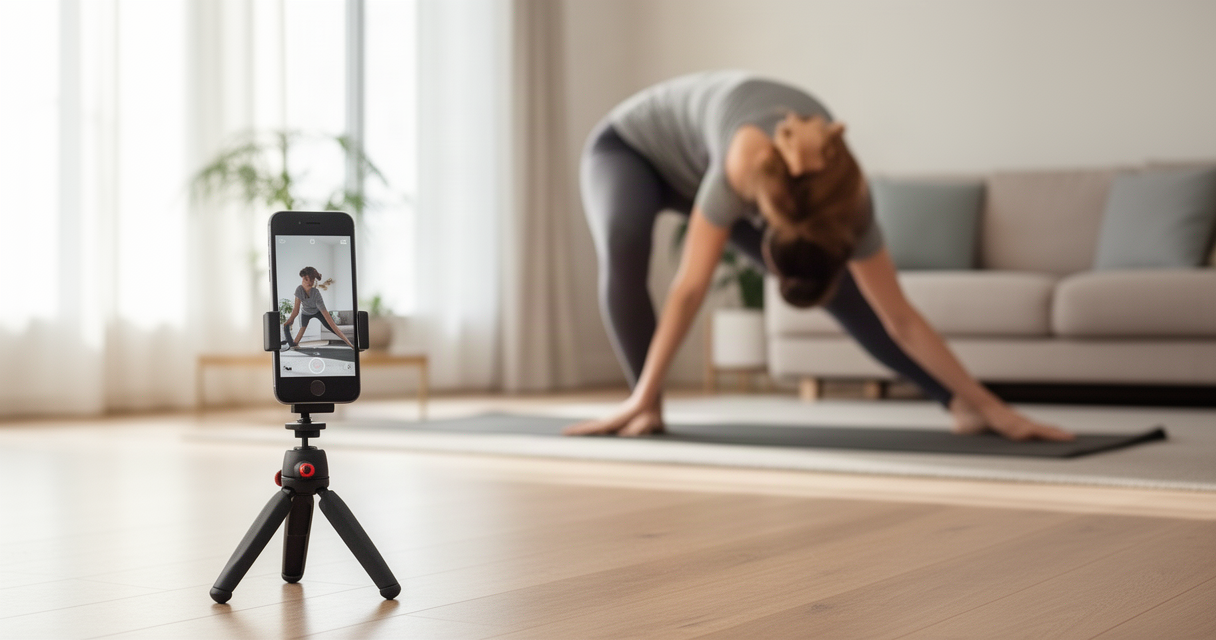
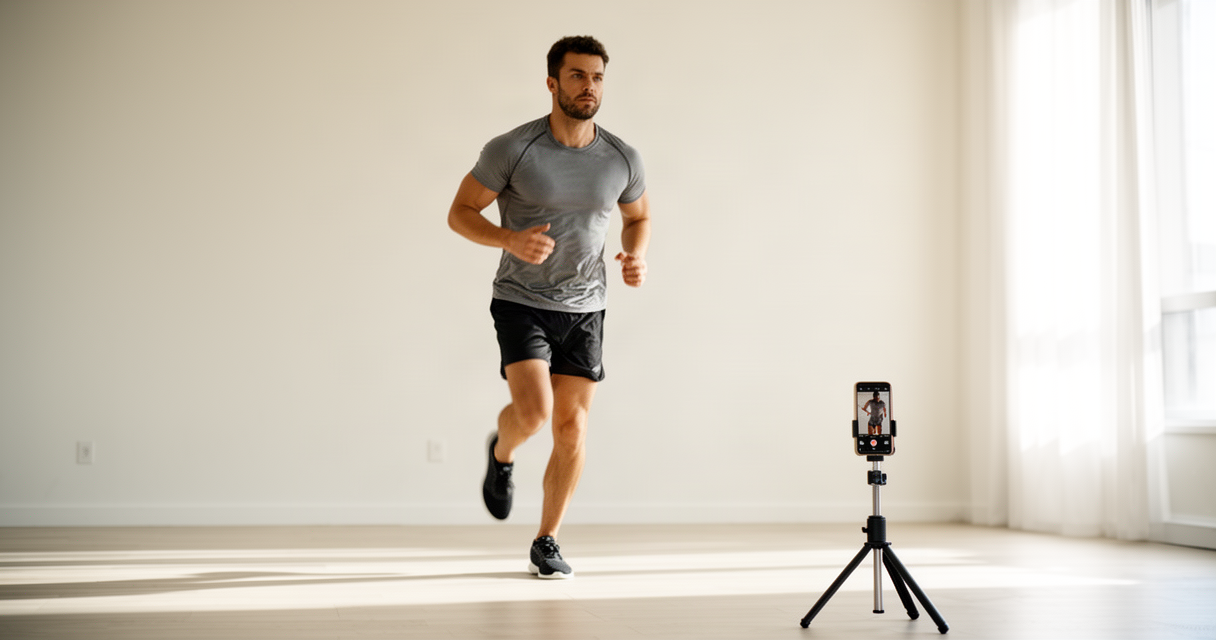
The capture method is a slow-motion, side-view video, and the output is a per-run form breakdown flagging issues like cadence, heel-strike pattern, and vertical oscillation, per Ochy’s own runner-facing product page. In February 2026, Ochy partnered with adidas through the adiClub loyalty program, offering a free three-month trial redeemable through adiClub points, according to adidas’s own blog post announcing the deal. Outside that promotion, Ochy’s entry pricing is reported at about $9/month, though one user on r/running described paying closer to $15/month for a plan capped at three analyses — a discrepancy worth confirming directly with Ochy before subscribing.
App Store reviews for Ochy are mixed on the business side more than the analysis itself. Recurring complaints cite a paywall that appears earlier than expected, a “limited-time discount” that shows up repeatedly rather than once, and an analysis screen that goes gray or fails to load after payment. Not every review is negative — one review from a coach evaluating Ochy for client use was positive about the specificity of the flagged metrics, even while noting the tool works best as a supplement to their own eye, not a replacement for it.
Movaia
Movaia skips the native app entirely — running video gets uploaded through the web, and the platform returns what the company describes as an approximately 40-page biomechanics report, per Movaia’s own pricing page. That depth is the pitch: instead of a quick flag list, Movaia positions itself as a comprehensive written analysis, plus “RunBot,” an AI chat coach that answers follow-up questions about the report, according to Movaia’s marketing. Both the report length and the chatbot’s usefulness are vendor claims, not independently verified.
Pricing starts from about $5.99/month, but a reviewer evaluating Movaia’s own comparison page against Ochy noted the pricing structure is not fully transparent about what’s included at each tier — worth reading the fine print, not just the headline number, before committing.
RunForm AI
RunForm AI’s differentiator is capture angle: it records side and back views in the same session, then tracks 15 separate metrics across both angles, according to the app’s own product page. Two camera angles catch more than one — a back-view can pick up hip drop or crossover gait that a side-view alone misses entirely.
Pricing runs on credit packs rather than a flat subscription — reported at roughly 15 credits for $1.99 or 5 credits for $0.99, with an ad-supported free tier also available, per the App Store listing. That structure makes RunForm AI the cheapest way to get dual-angle capture, though exact credit costs per analysis should be verified in-app since credit consumption isn’t always spelled out clearly upfront.
Forma
Forma’s pitch is the plainest of the four: a free tier, a single video upload, and a report the company says was “designed with sports-medicine input,” per Forma’s own site — a vendor positioning claim, not a third-party certification. There’s less marketing noise around Forma than the other three, which also means less independent discussion of it in running communities to weigh against the vendor’s own claims.
For a runner who just wants a first look before spending anything, Forma is the reasonable starting point precisely because it doesn’t ask for a card upfront.
It’s worth noting these single-camera video limits aren’t unique to running. Anyone who’s tried AI form-check apps for lifting without a spotter has run into the same monocular-video ceiling — a phone camera in one position can only see so much of a moving body, regardless of the sport.
The Accuracy Reality: Can a Phone Video Really Replace a Lab?
This is the load-bearing question, and the answer is not flattering to the marketing.
A systematic review published on ScienceDirect comparing markerless (video-based) motion capture against marker-based lab systems found per-joint position error of roughly 72–122mm for 2D markerless setups, and roughly 146–249mm for 3D markerless setups, relative to the gold-standard marker-based capture used in sports medicine labs. Those are not rounding errors — they represent a meaningful gap between what a phone camera can measure and what a lab-grade system captures.
A separate ScienceDirect study comparing capture configurations found that binocular or multi-camera setups (the kind used in systems like OpenCap) consistently outperform single monocular-camera setups on measurement accuracy. Every app reviewed here — Ochy, Movaia, RunForm AI, Forma — runs on monocular or, at best, sequential single-angle video, not synchronized multi-camera capture.
An industry insider commenting on r/running put it plainly: these apps “measure angles/detect overstriding reasonably well,” but the analysis “falls apart on recommendations because form changes that help one runner can hurt another.” That’s the individualization problem from earlier, stated from the inside of the industry. A separate observation from the same community: a 2D phone camera “misses lateral lean, hip drop, arm cross” — the exact deviations a back-view or side-view camera in a fixed position simply cannot see in a single pass.
A YouTube critique circulating in running form discussion also flagged a more basic issue: form recorded on a treadmill doesn’t always match form outdoors, because treadmill belt speed and surface feedback change stride mechanics. An app analyzing treadmill footage may be analyzing a stride that doesn’t fully represent how someone actually runs on the road.
A physical therapist reviewing this category of app raised a more fundamental caution: flagging a correlation between a visible form trait and injury risk is not the same as establishing causation for a specific runner’s specific injury. Any “lab-quality” language a vendor uses to describe its analysis should be read as a vendor claim, not an independent accuracy rating — none of the four apps here have published third-party validation against a marker-based lab.
The honest summary: these apps are reasonably good at flagging gross, obvious issues — overstriding, low cadence, an aggressive heel-strike. They are not good at diagnosing why those issues exist, because the “why” usually involves strength, mobility, and injury history that a ten-second video simply cannot see.
Our Take: Which App (If Any) Should You Use
Start free. Forma’s no-cost tier is the right first move for anyone curious but not yet convinced this category is worth paying for.
For runners on iOS who want the most polished experience and don’t mind the subscription, Ochy is the stronger pick among the paid options — the app itself and the analysis flow are more refined than the newer entrants, even with the App Store paywall complaints. Movaia is the pick for someone who wants a genuinely long written report to sit with, not a quick flag list. RunForm AI is the pick for anyone specifically wanting dual-angle capture without paying a monthly fee.
Whichever app gets used, the output should function as a conversation starter with a coach or physical therapist — not as a diagnosis to act on alone. One App Store review of a paid tier summed up a common sentiment bluntly after weeks of use: the analysis “ain’t it,” and the reviewer’s actual recommendation was to go see a physical therapist instead. A separate thread on r/running raised a sharper concern: posting running video publicly for stranger feedback, a common workaround to avoid paying for an app, “can be harmful” advice-wise, and the better move is still to see a PT.
None of these four apps fix a training plan — that’s a different tool solving a different problem. Runners who need pacing, mileage progression, or workout structure are better served by an AI running coach like Runna or Garmin Coach, which builds training plans rather than analyzing stride mechanics. And running isn’t the only endurance sport wrestling with this tradeoff — self-coached swimmers face the same tradeoff between a cheap app-based stroke check and an actual in-person coach’s eye.
AI App ($9-20/mo) vs In-Person Gait Assessment (~$150 One-Time): The Real Cost Math
A clinical 2D video gait analysis at a sports medicine or physical therapy clinic runs roughly $75–150 per session, and a full 3D lab assessment runs roughly $350–600 or more, according to cost figures published by achillesfootandankle.com, a foot and ankle specialty practice.
Set those against a year of an AI form-check app: at reported pricing of roughly $9–20/month, a full year runs somewhere around $60–240, depending on the tier. That’s cheaper than even one in-person clinical session in most cases — but the comparison rests on stated assumptions (12 months of continuous subscription vs. a single one-time visit) and isn’t an apples-to-apples trade.
The honest framing matters here: the app isn’t cheaper because it’s equally good. It’s cheaper because it’s doing less — a monocular phone video against a marker-based or multi-camera clinical setup, with a per-joint error margin the ScienceDirect review put at 72–249mm depending on configuration. For a runner with genuine, persistent pain, the $150 session buys something the app structurally cannot: a trained professional looking at strength, mobility, and history alongside the video.
Frequently Asked Questions
Is Ochy accurate for running form analysis?
Ochy can reasonably flag visible deviations like cadence and heel-strike pattern from its slow-motion video capture, per its own product claims and community feedback. But it runs on monocular video, which carries the same error margins documented in the ScienceDirect systematic review for markerless 2D capture — treat its output as a flag, not a diagnosis.
What is the best free running form analysis app?
Forma currently offers a free tier and is the reasonable starting point before paying for anything, according to its own product page — though the scope of what’s included free should be verified directly, since free tiers are commonly trimmed over time.
Do AI gait analysis apps prevent running injuries?
No app in this category claims to prevent injuries outright, and none should be trusted to. At best, they can flag risk factors like overstriding or a heavy heel-strike that a runner can then discuss with a coach or PT — prevention itself depends on what’s actually done with that flag.
AI running form app vs physical therapist gait analysis — which is better?
For a runner with persistent pain, a physical therapist’s in-person assessment is the stronger option, because it accounts for strength, mobility, and injury history that a single video simply cannot capture. For a runner without pain who’s just curious, an app is a reasonable, cheap first look.
Can a phone camera really analyze running form as well as a lab?
No, and none of the vendors reviewed here have published independent validation claiming otherwise. The ScienceDirect systematic review found meaningfully higher joint-position error for markerless (video-based) capture versus marker-based lab systems, and binocular/multi-camera setups outperform the single-angle capture these apps use.
Which app should injury-prone runners try first?
Start with Forma’s free tier for a no-cost first look. If the flags line up with symptoms already present, move to a paid option like Ochy or RunForm AI for more detail — but persistent pain is the signal to book an in-person assessment rather than keep testing apps.
The Bottom Line
These apps are not snake oil. They’re a real, cheap way to catch obvious form issues when an in-person assessment isn’t an option right now. They are also not a lab, and they are not a physical therapist — the accuracy gap documented in the ScienceDirect research is real, and no amount of vendor polish changes the underlying math of a single phone camera.
For runners who are pain-free and just chasing marginal gains, the money is better saved. For runners dealing with a recurring issue and no access to a coach, start with Forma’s free tier, then decide whether Ochy’s polish, Movaia’s depth, or RunForm AI’s dual-angle capture is worth $9–20 a month. For runners whose pain hasn’t gone away, the next step isn’t another app — it’s the $150 in-person assessment.
The app can tell you that you overstride. It can’t tell you why your left hip won’t stop compensating for it — and neither will any amount of AI hype change that.
References
- Ochy — runner-facing product page, ochy.io/runners
- Ochy — adidas adiClub partnership announcement (February 2026), adidas official blog
- Ochy — pre-seed funding report, sportbusiness industry funding coverage
- Ochy — App Store reviews (paywall, discount messaging, and analysis-loading complaints; coach review)
- r/running — form-check app discussion thread (thread ID 1sdybhi)
- r/running — form-check app discussion thread (thread ID dg0qov)
- r/beginnerrunning — Ochy discussion thread
- Movaia — pricing page, movaia.com/pricing
- Movaia — Movaia vs. Ochy comparison page, movaia.com
- RunForm AI — product page, runformai.com
- RunForm AI — App Store listing
- Forma — product page, forma.run
- ScienceDirect — systematic review, markerless vs. marker-based motion capture joint-position error
- ScienceDirect — binocular vs. monocular camera capture accuracy comparison
- achillesfootandankle.com — clinical and 3D lab gait analysis cost figures
- YouTube — treadmill vs. outdoor running form comment/critique
Reported pricing and features change frequently — verify each vendor’s live page before subscribing. This article is not medical advice; see a physical therapist or sports medicine professional for persistent pain.