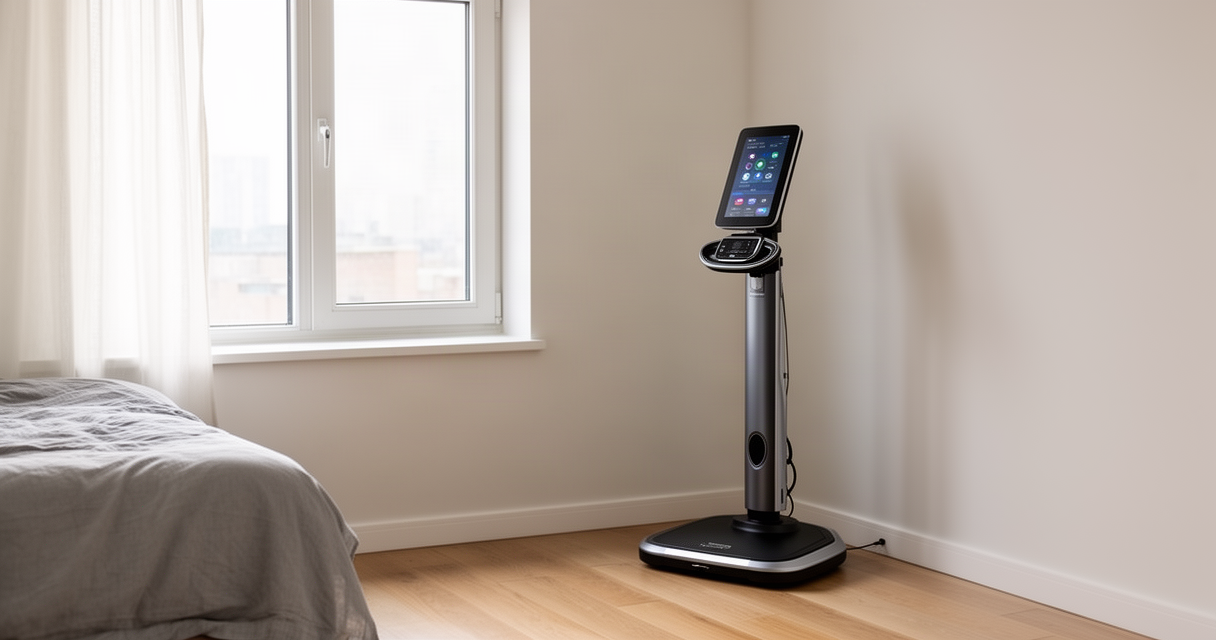
Search “AI rowing coach” and two names keep circling back to the same plain Concept2 erg: ErgManiac and Asensei. Only one of them is actually AI.
Rowing alone, with no coach watching the catch or the slide, means the feedback loop has to come from somewhere. Get the source wrong and a rower ends up either trusting an unproven algorithm to grade a stroke it has barely seen, or paying a premium subscription for a name that sells itself on a brand rather than a technology.
The quick answer: ErgManiac is genuinely AI — computer-vision stroke scoring plus AI-generated training plans, built by an independent rower/developer and launched on Reddit in April 2026. Its video technique analysis is brand new (added around May 2026) and still unproven at any real scale. Asensei is a decade-old, human-designed coaching program built around Olympic champion Eric Murray, delivered through real-time sensor-based audio cues during the stroke. It is genuinely useful, but it is not generative AI or computer vision, despite marketing that leans “AI-adjacent.” It also requires its own Bluetooth-compatible performance monitor. Neither replaces watching a real force curve.
For a wider view of the category, see the roundup of the best AI personal trainer apps. Here, the comparison narrows to two tools built specifically for a plain Concept2 setup.
What Each One Actually Is (and Which Is Really AI)
ErgManiac is the newer, smaller player. An independent rower and developer launched it on r/concept2 and r/Rowing in April 2026. The core claim holds up on inspection: it uses computer vision to read a photo of the PM5 screen, generates periodized training plans across five zones (targeting 2K, 5K, or half-marathon goals), and — as of roughly May 2026 — scores a rower’s catch, drive, finish, and recovery from a 15-second side-view video. That is generative AI and computer vision doing real work, not a marketing label stuck on a rules engine.
Asensei is the opposite case. Its coaching content is designed by humans and credited to Eric Murray — an 8x world record holder, 4x Olympian, and 2x Olympic gold medalist. It gets delivered through a Bluetooth performance monitor that gives real-time audio and visual cues during the stroke itself. Nothing about that chain involves a model generating new output; it is sensors triggering pre-set rules. Asensei’s own marketing leans on “AI-adjacent” language, but there is no computer vision or generative AI doing the coaching.
That split matters more than either brand’s marketing admits. One tool is new, unproven AI. The other is proven human coaching wearing an AI label because the label sells.
ErgManiac’s newness also raises a legitimate trust question. One rower on r/Rowing flagged that the site had “no impressum on the page at all… Only thing I can find out about you… hints at you being from Croatia,” pointing at the lack of basic company transparency (the founder addressed it in the same thread). None of that is disqualifying for a solo-developer launch — it’s simply a fair reason to treat ErgManiac as small and early rather than established.
Both tools deserve scrutiny on price, too. ErgManiac charges for AI features that have not been independently validated. Asensei charges a premium partly for a name — Eric Murray’s résumé is real, but some of what a subscriber pays for is available free elsewhere.
The Hardware Reality: What Works With a Plain Concept2 PM5
ErgManiac needs nothing beyond a phone. The photo scan and the 15-second video both run off a phone camera, and the optional Concept2 Logbook connection is a one-time setup. No Bluetooth pairing is required for core use, and nothing has to sync live during a row.
Asensei is a different category of product. It requires an Asensei-compatible Bluetooth performance monitor paired live to a phone or tablet running the app for the duration of the workout. This is a real-time coaching system rather than a log-review tool, and it depends on that live connection to deliver cues mid-stroke. Asensei’s site reports compatibility with Concept2, WaterRower, and FluidRower monitors — worth confirming current compatibility directly on asensei.com before buying anything.
Practically, that means budgeting for a tablet or phone mount at the erg for Asensei, and accepting that Bluetooth is now part of the workout. Anyone who has already fought dropouts pairing a phone with ErgData should weigh that experience before paying for a system that depends on the same connection staying live for 20-plus minutes at a time.
ErgManiac: The AI Computer-Vision Stroke Analysis (New but Promising)
ErgManiac’s core loop starts with logging. The photo scan reads a picture of the PM5 screen — splits, intervals, heart rate — and the Concept2 Logbook sync backs that up automatically. From there, the AI builds training plans across five zones (UT2, UT1, AT, TR, AN), mixing erg sessions with gym work, and produces post-workout analysis covering pacing, zone adherence, and a recommendation for the next session.
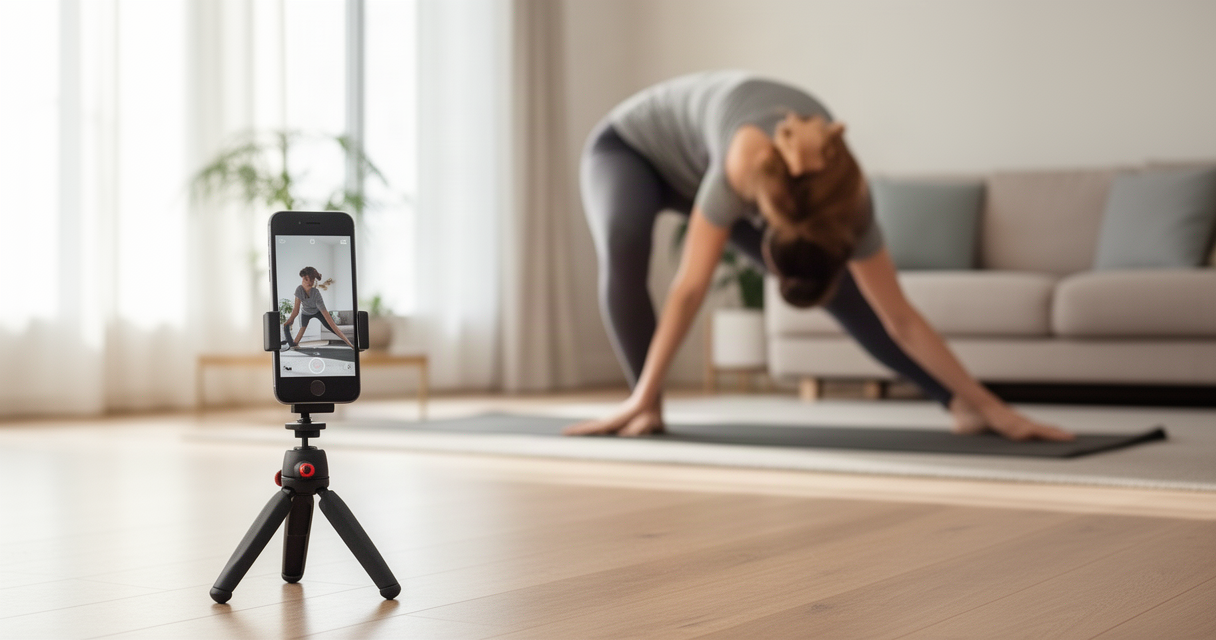
The newer piece is the AI video technique analysis added around May 2026: upload a 15-second side-view video of the stroke, and the tool scores each phase — catch, drive, finish, recovery — with recommended drills attached to weak spots.
Pricing is reported at a free tier (manual entry, basic history) plus a Pro tier at approximately €2.99 per month with a 7-day free trial, per the founder’s April 2026 launch post — figures worth confirming directly on ergmaniac.com since early-stage pricing shifts.
The honest caveat: this is a small, brand-new tool with a thin user base, and the computer-vision accuracy has not been proven at scale. One early adopter on r/concept2 said, “I’m using photo scan regularly, I am looking forward to using ai technique analysis. Will get back to you” — with no public follow-up confirming whether the scoring actually held up. Another gave a thinner endorsement: “The form check is a great add.” Neither is independent verification.
ErgManiac deserves credit for being genuinely AI and for solving a real logging headache that most self-coached rowers currently do by hand. But a form score from a tool this new should be treated as a prompt to investigate, not a verdict to accept. For a look at what a more mature version of AI form-checking looks like across fitness broadly, see the roundup of AI form-check apps that don’t need a spotter.
Asensei: Human-Designed Coaching in Real Time (Proven but Pricey/Branded)
Asensei’s structured programs — including Eric Murray’s (RE)COMMIT — deliver real-time audio and visual cues on pace, stroke rate, and target splits while the rower is mid-stroke. The functional difference from ErgManiac shows up here: Asensei applies pressure during the workout, not just review after it.
There is real free value outside the paywall. Eric Murray livestreams a free workout most Sundays through Asensei’s YouTube channel, with no subscription required.
Pricing is reported at approximately $11.25 per month billed annually — confirm current pricing on asensei.com, since it has moved before. A 2020 Reddit thread flagged confusion over Asensei’s old per-coach pricing model; the company has since consolidated to a single unified membership, which removes that specific complaint.
Community sentiment is genuinely split on value. One rower on r/Rowing said, “So far I’m really liking it… the kicker is, that Asensei will set challenging but achievable targets for you, based on your performance. And it’ll be up in your face if you’re not pushing hard enough during the workout.” Another, on r/concept2, was more measured: “I like the structure of Asensei but really I was just in it for Eric Murray and found the videos he does on YouTube to be enough for me. I still think Asensei is great if you are rowing multiple times a week and have specific goals.”
The “coached by an Olympic champion” premium is real, and some of what it buys is partially available free on YouTube. That said, in-stroke real-time pacing pressure is genuinely hard to replicate without a live sensor system — this is not pure hype dressed up as coaching.
Does the AI Actually Catch Real Stroke Faults?
This is where the two tools diverge most sharply, and where both deserve pushback.
ErgManiac’s computer-vision scoring is unproven at scale — no independent accuracy testing turned up in public discussion. The scores it returns should get checked against faults a rower already suspects: shooting the slide, bending the arms too early, rushing the catch. If the score confirms a fault already visible on the force curve, it is useful confirmation. If it contradicts what the force curve shows, the force curve wins.
A skeptic on r/Rowing summarized the category bluntly: “I haven’t been impressed with any AI coaching I’ve encountered. Maybe yours will be the first, but I doubt it. I say this as someone who switched from a decade of D1 coaching to now building agentic AI products.” That is a credentialed, informed skepticism worth taking seriously rather than dismissing as reflexive AI-hate.
AI running-form analysis is further along than rowing’s version of the category — see how AI running-form apps stack up against each other for a sense of what a more mature product in this space looks like. That comparison puts ErgManiac’s rowing computer vision in context: genuinely early-stage, not yet battle-tested.
Asensei’s “AI-adjacent” real-time cues are rules-based, triggered by sensor thresholds on pace and stroke rate. That system will not flag early arm bend or a back opening too soon — it has no way to see the stroke. What it will do is keep a rower honest on rhythm and pacing in real time, which is a different and genuinely real form of help, not a technique diagnosis dressed up as one.
Neither tool replaces watching a real force curve or getting an actual person to look at footage. Both brands’ “AI” framing oversells, in different directions, what is technically happening under the hood.
The Free Baseline: A Proven Erg Plan + Filming Yourself
Before paying either company, there is a legitimate zero-cost starting point. The Pete Plan, including the Beginner Pete Plan, is a free, decades-proven, community-recommended structured erg program — a real baseline, not a placeholder.
The PM5’s built-in force curve is free, real-time visual feedback that most self-coached rowers underuse. As one rower explained on r/Rowing: “The concept2 has a data field on the monitor called a force curve. It draws a curve each stroke you take. It’s really the only feedback tool you need to evaluate your form. A smooth, single humped line - every time. If you have bad form, you’ll have multiple humps, a jagged line, etc. Nothing beats real time, visual feedback.”
Filming a stroke side-on and checking it against known fault cues — shooting the slide, early arm bend, rushing the catch, opening the back too early — costs nothing. It is also the same basic move ErgManiac’s paid feature automates, just done by eye instead of by algorithm.
This is the baseline every self-coached rower should try first, before deciding which paid tool fills a specific remaining gap: structured programming points toward ErgManiac, real-time in-workout pressure points toward Asensei. Fitness has always had a snake-oil problem, and AI is just the newest bottle it comes in — the same tradeoff shows up in the free-app-vs-paid-sensor decision self-coached lifters face with velocity-based training.
Pricing & Who Each Is For
Both prices are reported figures, not guarantees — confirm current numbers on each vendor’s site before buying. ErgManiac Pro is reported at approximately €2.99 per month with a 7-day trial, per the founder’s April 2026 launch post. Asensei is reported at approximately $11.25 per month billed annually.
ErgManiac fits budget-conscious rowers who want automated logging and a structured, AI-built training plan, and who are willing to be early adopters of a technique-scoring feature that has not been proven at scale.
Asensei fits rowers who want real-time in-workout coaching and motivation, who value a proven human coaching pedigree, and who do not mind paying more and owning compatible hardware.
Neither fits total beginners — that group should start free, with the Pete Plan and the PM5 force curve. And both tools are erg- and PM-focused: no verified evidence surfaced that either addresses on-water rowing technique, so on-water rowers should not expect erg feedback to transfer directly onto the water.
Our Verdict: Which Self-Coached Rower Should Pick Which
The default move is free: run the Pete Plan, use the PM5 force curve every session, and film a stroke check against the known fault cues. That combination costs nothing and covers most of what a self-coached rower actually needs.
Add ErgManiac when the specific gap is automated logging plus a structured AI-built plan, with eyes open that the technique-scoring feature is new and unproven. Add Asensei only when the specific gap is real-time in-workout pacing pressure paired with a genuine human coaching pedigree — and a willingness to pay the premium and buy compatible hardware.
Using both is possible, since they solve different problems, but neither is required to row well. Whichever gets picked, pairing it with a dedicated prehab routine covers the injury-prevention gap that neither app touches.
The Bottom Line for Self-Coached Rowers
ErgManiac is the only genuinely AI tool of the two, and it is still unproven. Asensei is the proven human-coached experience wearing AI-adjacent marketing. Neither is required to row well.
The practical next step: film a stroke and run the free Pete Plan for a few weeks before paying anyone. Then decide which specific gap — structured planning or real-time in-workout coaching — is actually worth paying to fix.
The best rowing coach in either app is still the one holding the phone.
FAQ
Is ErgManiac actually AI, or just marketing?
It is genuinely AI — computer vision reads the PM5 screen and scores stroke video, and the training plans are AI-generated. The caveat is maturity: it launched in April 2026, added video technique analysis around May 2026, and has no independent accuracy testing to date.
Is Asensei worth it for a self-coached rower in 2026?
It depends on what is missing. Rowers who need real-time in-workout pacing pressure and value Eric Murray’s coaching pedigree tend to find it worthwhile; rowers mainly after motivation can get a meaningful chunk of that free through Asensei’s Sunday YouTube livestreams.
Does ErgManiac’s AI technique analysis work with just a Concept2 PM5, or do I need extra hardware?
Just a phone. The video technique analysis and photo scan both run off a phone camera, with an optional one-time Concept2 Logbook connection. No Bluetooth pairing is required.
What hardware does Asensei require?
An Asensei-compatible Bluetooth performance monitor paired live to a phone or tablet during the row. It is a real-time system, not a log-review tool — confirm current compatible monitors (Concept2, WaterRower, FluidRower reported) on asensei.com.
Can either tool help with on-water rowing technique, or are they erg-only?
Both are built around erg and PM data. No verified evidence surfaced that either tool’s technique feedback addresses on-water rowing, so on-water rowers should not assume erg feedback transfers directly.
Is there a free way to check my rowing form without paying for either app?
Yes. The PM5’s built-in force curve gives real-time visual feedback on stroke quality, and filming a side-on video to check against known fault cues (shooting the slide, early arm bend, rushing the catch) costs nothing.